Disclosure: This post may contain affiliate links, meaning Beautiful Christian Life LLC may get a commission if you decide to make a purchase through its links, at no cost to you.
There exist the visible church and the invisible church.
The visible church consists of all who profess Christ as their savior.
Yet, Jesus states,
“Not everyone who says to me, ‘Lord, Lord,’ will enter the kingdom of heaven, but the one who does the will of my Father who is in heaven.” (Matt. 7:21)
Jesus also tells us what the Father wills:
“For this is the will of my Father, that everyone who looks on the Son and believes in him should have eternal life, and I will raise him up on the last day.” (John 6:40)
Professing to be a Christian does not necessarily mean that a person has been regenerated to new life by the Holy Spirit.
The invisible church consists of all who are regenerated to new life in Christ by the Spirit. Professing Christ does not mean one will endure to the end; having new life in Christ by the Spirit does mean one will endure to the end because the Spirit does not come and go depending on our level of faithfulness (Eph. 1:23-24). Once the Spirit has regenerated you and given you a new life, he keeps your life and preserves you forever.
The Westminster Confession of Faith, one of the great confessions of the historic church, states,
They, whom God hath accepted in His Beloved, effectually called, and sanctified by His Spirit, can neither totally nor finally fall away from the state of grace, but shall certainly persevere therein to the end, and be eternally saved. (Phil. 1:6, 2 Pet. 1:10, 1 John 3:9, 1 Pet. 1:5,9) — Westminster Confession of Faith 17.1
The invisible church consists of those throughout the ages who have new life in Christ, which will never be taken away from them.
Salvation is God's gift entirely. Someone who has new life by the Holy Spirit cannot lose their salvation. All who endure to the end are those who are truly saved.
"But the one who endures to the end will be saved.” (Matt. 24:13)
The apostle John makes this very point when speaking of professing believers who have left the faith:
They went out from us, but they were not of us; for if they had been of us, they would have continued with us. But they went out, that it might become plain that they all are not of us. But you have been anointed by the Holy One, and you all have knowledge. (1 John 2:19-20)
Those who endure to the end are those who truly have new life—they are a new creation in Christ and are united to Christ. Professing Christians who are living the lifestyle of an unbeliever must examine themselves to see if they are truly in Christ for the sake of their eternal souls. Faithful church leaders will also care enough to exercise loving discipline when they see a wandering sheep, instead of just looking the other way.
Believers did nothing to earn regeneration and there is nothing they can do to become unregenerated. The Spirit indwells all true believers, and he convicts God’s children of their sin in his sanctifying work. No one will snatch Jesus' sheep from his hand (John 10:28).
Disclosure: This post may contain affiliate links, meaning Beautiful Christian Life LLC may get a commission if you decide to make a purchase through its links, at no cost to you.
It's not fun to be treated poorly by anyone, but why do people who are supposed to be loving, kind, and forgiving—yes, I'm referring to Christians—behave badly? Here are six reasons:
1. Some people who claim to be Christians aren’t.
There are people who think they are Christians because they grew up in homes with parents who considered themselves Christians—and maybe even went to church regularly. Growing up in a Christian household doesn't make a person a Christian. Just as the Pharisees saw themselves as more righteous than other people because of their heritage (Luke 3:8), some people think it is a matter of the family into which they are born when it comes to one’s standing before God.
Belonging to Christ is not a matter of heritage; rather, believers are declared righteous based on both Christ’s perfect sacrifice and perfect righteousness counted to them by God’s grace alone through faith alone. The new life within every believer comes from the regenerating work of the Holy Spirit, not from one’s family lineage.
2. All Christians are still sinners.
Even though Christians are hagios (holy; set apart; Col. 3:12) as God's adopted children, they are also in the process of dying to the old self (mortification) and living unto God (vivification). This work of sanctification by God’s word and the Holy Spirit is a gift from God given to all believers.
Christians will not be free of their sinful flesh until they pass from this life. Growing in holiness is a lifelong process that is never complete in this life. The Heidelberg Catechism in question 114 summarizes the state of believers:
Q. Can those who are converted to God keep these commandments perfectly?
A. No, but even the holiest men, while in this life, have only a small beginning of this obedience; yet so, that with earnest purpose they begin to live not only according to some, but according to all the Commandments of God.
It is true that Christians can be selfish, thoughtless, mean, and rude—just like non-Christians. Christians, however, have God’s Word and the Holy Spirit working in their hearts to conform them to the image of Christ (Rom. 8:29; 2 Cor. 3:18). Believers also struggle with laziness, lack of discipline, pride, and various temptations, like everyone else does.
Christians may not realize the harm they have caused to others, and this doesn’t excuse their sinful behavior. Yet, we must remember that all of us have acted wrongly at various times in life, and we need to forgive others—both Christians and non-Christians—as our heavenly Father has forgiven us.
3. Some Christians come off as “preachy” in their efforts to be helpful.
Christians do have a responsibility before God to stand up for and uphold what is right. Just because we may not like some aspect of God's truth doesn't mean that we don't need to hear it. Still, sometimes Christians can wind up coming off as judgmental or having a “holier-than-thou” attitude.
What non-Christians need to hear most of all is the truth that all of us are sinners in need of a restored relationship with God through Jesus, and what they really need to be shown is the love of Christ.
When Christians recognize that they are sinners just like everyone else and their salvation rests completed on the finished work of Christ done on their behalf, they can better focus on loving others and sharing the good news of the gospel with them, instead of trying to “fix” people’s sinful behavior.
When the Holy Spirit takes up residence in the hearts of believers, he has promised to complete the work of conforming God’s children to the image of Christ (Phil. 1:6). Christians do need to hold fellow believers to account regarding their sin in a respectful and loving manner, while at the same time being careful not to add burdens to Christians that God never meant them to bear (Acts 15:10; Gal. 6:1-2).
4. Some Christians think it’s okay for them to sin since they are forgiven in Jesus.
Some Christians are wrongly taught that they can act however they want and that it's okay because God will forgive them because of Jesus’ sacrifice for their sins. The technical name for this kind of thinking is antinomianism. They don't understand that there are duties and responsibilities to being a child of God, and believers must always seek to honor and obey their heavenly Father, even though they will do so imperfectly in this life (1 Cor. 6:20).
When the Holy Spirit indwells believers, he convicts them of their sin and leads them to repentance (John 16:8). When people choose to sin on a regular basis without any regard for God’s law, they are following their own way and not Christ.
5. Christians sometimes react sinfully when they experience misery in this world.
When Christians suffer due to various circumstances—including physical or emotional illness, broken relationships, the death of someone dear, abuse, and financial distress—they don’t always respond in a Christ-like manner. Sometimes the hurt is so great that they act out in confusion, despair, anger, and even emotionally or physically harmful behavior to others.
Christians also give in to sinful desires, even though they know they shouldn’t. This is why Jesus specifically tells his followers to pray to their heavenly Father, “And lead us not into temptation, but deliver us from evil” (Matt. 6:13).
Because Christians continue to fight against sin in this life, it is critically important for them to be in regular fellowship with other believers in a local church where they can be cared for and nurtured by their pastor, elders, and deacons with proper oversight and receive the preached word, sacraments, and loving discipleship.
6. Some Christians are confused about their faith.
It is important to point out one other reason why many Christians don't live out their faith very well at times. Since the high point of Protestant Reformation teaching in the late 1600s, there has been a decreasing focus on foundational doctrine and an increasing focus on experiential-based faith.
Without a core understanding of who Jesus is, why he came, and what he did (that no one else could do), believers can be confused about what their faith is and how to share and live it out daily. And that confusion can lead to poor behavior that turns off non-Christians from ever wanting to know more about Jesus.
Final Thoughts
It's easy to get discouraged by certain Christians at times, but you likely know many kind-hearted, loving Christians as well. They would give the shirt off their backs for you, and it's not because they are getting anything for it.
They want to share with you the love they have received from their heavenly Father in Christ. The old saying is true: Christians aren't perfect, but they are forgiven. And God is growing them in holiness—even though it may be hard to tell at times!
Yet, there is one who never hurt anybody. This one loves the world so much that he gave his life so that you could be at peace with God. You can trust this person to save your soul, care for you always, and receive you into his kingdom. This person is no less than the Son of God. Jesus lived the perfect life and offered up his perfect body so that all who trust in him will live forever to the glory of God in perfect happiness as life was meant to be.
When you are tempted to write off Christianity because of Christians, remember that we live in a fallen world for the time being, and Christians live with the effects of the fall along with non-Christians.
God is not willing that any should perish (2 Pet. 3:9), and he is patiently gathering all those who will come rest in the arms of Jesus. And these beautiful arms stretched themselves out on a cross to die a horrible death because of God’s unfathomable love for us:
But to all who did receive him, who believed in his name, he gave the right to become children of God,who were born, not of blood nor of the will of the flesh nor of the will of man, but of God. (John 1:12-13).
Disclosure: This post may contain affiliate links, meaning Beautiful Christian Life LLC may get a commission if you decide to make a purchase through its links, at no cost to you.
When we think of Christianity, what comes to mind? For many, the idea that Christianity is a religion of rules may be a common thought. You may be surprised, however, by the truth that Christianity is a religion of freedom: freedom from the pressure of believing you have absolute control over your life, freedom from dangerous and hurtful tendencies, freedom from isolation, and freedom from sin and eternal destruction. And this freedom comes because believers in Christ belong to a Savior who loves, protects, nurtures, comforts, supports, and purifies his precious ones.
Christ frees us to obey God’s rules of love, and he also frees us to explore and embrace the world around us using wisdom.
In fact, the things Jesus calls us to do are things rooted in love for God and love for our neighbor—things this world would do much better to practice, as we all know of nasty divorces, murders, thefts brought on by covetousness, and lies that damage relationships. Our acts of love to God and neighbor are summarized in the Ten Commandments, which when lived out cause believers to begin to image their Creator more perfectly as they pattern their lives after a good and kind God.
In addition to Christ freeing us to obey these rules of love, he also frees us to explore and embrace the world around us using wisdom. There are many things the Bible does not specifically speak about, and concerning these things Christians have the freedom to make decisions using wisdom and biblical principles. For example, questions of how to school your children—public, private, home school, or charter school—are matters that are not laid down in Scripture. One believer's decision or choice may be different than another; yet, they have the freedom in Christ to hold different opinions on such matters.
Because of our liberty in Christ we must demonstrate charity, patience, and understanding toward those whose choices are different than ours.
Other areas of freedom include child-rearing practices, bottle-feeding versus breastfeeding, types of jobs to pursue, styles of clothing, understanding of modesty, family customs, dancing, drinking alcohol, playing video games, watching certain movies, etc. These and many more issues are ones that must be examined with wisdom and scriptural principles, but Christians may differ in their conclusions.
Because of our liberty in Christ we must demonstrate charity, patience, and understanding toward those whose choices are different than ours (and hopefully they will do the same towards us). There are some things that are non-negotiable—the gospel and those things that are clearly commanded in Scripture. With other things we must live in humility (recognizing we may not always get it right) and with love for others who, along with us, have the freedom to make different choices.
Disclosure: This post may contain affiliate links, meaning Beautiful Christian Life LLC may get a commission if you decide to make a purchase through its links, at no cost to you.
Mortification of sin is not often discussed openly in churches these days. It sounds very Puritan. In a sense, it is. If anyone had a deep understanding of the reality of sin and its impact, it was the Puritans. What’s even more unfortunate is the dilution, perversion, and complete loss of the principle itself. Absence of the mortification of sin in the contemporary church, however, has not removed the principle from Scripture.
“Put to death what Is earthly in you.”
In his letter to the Colossians, Paul deals with the dynamic of our new nature versus the combative presence of the old:
If then you have been raised with Christ, seek the things that are above, where Christ is, seated at the right hand of God. Set your minds on things that are above, not on things that are on earth. For you have died, and your life is hidden with Christ in God. When Christ who is your life appears, then you also will appear with him in glory. (Col. 3:1-4)
The first four verses of chapter 3 talk about our new identity. It’s the substance of what life in Christ is. Paul frames his entire argument with “If you have been raised with Christ.” In other words, if we in fact have been made alive, these are his instructions with regard to remaining sin.
Put to death therefore what is earthly in you: sexual immorality, impurity, passion, evil desire, and covetousness, which is idolatry. On account of these the wrath of God is coming. In these you too once walked, when you were living in them. But now you must put them all away: anger, wrath, malice, slander, and obscene talk from your mouth. (Col. 3:5-8)
When Paul is laying these things out, he is not doing it in a way that is encouraging hypocrisy. He is not saying, “I want you to stop doing these things only so that you can appear moral and pious.” He’s saying, “I want you to put these sins to death, because as Jesus said, you are to be holy.” The sin in your life needs to be rendered completely helpless with regard to influencing your living and your relationship to God. Here are three reasons Christians work to mortify sin:
1. God’s wrath will be poured out on all unrighteousness.
When we mortify sin in our bodies and minds, we imitate the way our heavenly Father has mortified the wages of our sin through Christ.
The reason Christians struggle so deeply with the presence of unconfessed and unrepentant sin in their lives is because they know God sees it, they know what God is capable of toward it, and they know they are acting outside of their new identity.
Jesus did not die to allow God to shrug off our sin; he died to justify who we are before the holiness of God. The theologian R. C. Sproul says this about sin:
Sin is cosmic treason. Sin is treason against a perfectly pure Sovereign. It is an act of supreme ingratitude toward the One to whom we owe everything, to the One who has given us life itself. Have you ever considered the deeper implications of the slightest sin, of the most minute peccadillo? What are we saying to our Creator when we disobey Him at the slightest point? We are saying no to the righteousness of God. We are saying, “God, Your law is not good. My judgement is better than Yours. Your authority does not apply to me. I am above and beyond Your jurisdiction. I have the right to do what I want to do, not what You command me to do. (R. C. Sproul, The Holiness of God, p. 116)
If God is the ruler of this universe, there is nothing about sin that he, even as our Father, flagrantly dismisses. If that were true, there would be no need for sanctification. Rather, because sin is so grievous, particularly in the life of those who have new life in Jesus, God has set forth by way of his Spirit his sanctifying work. Apart from God’s work, we would never grow away from sin’s pull.
2. A Christian knows that these are the things from which he was saved.
We need to remember what sin has done versus what Christ has done for us. Jesus’ sacrifice not only justifies us before God, but it sets us free from the shackling effect of sin now:
Do not present your members to sin as instruments for unrighteousness, but present yourselves to God as those who have been brought from death to life, and your members to God as instruments for righteousness. For sin will have no dominion over you, since you are not under law but under grace. (Rom. 6:13-14)
Often, we fail to kill sin because we forget that Jesus’ sacrifice not only set us free from the wrath of God that is to come as a result of unrighteousness, but it has also set us free from the rulership of that sin.
Why else would Paul direct his instruction to us? He’s saying, “Do whatever you need to do. Even if that means recruiting a brother in Christ to help demolish the sin you have in your life right now and what will come in the future! It has no dominion over you! It is not your king, and if you claim to follow Jesus and you continue to harbor your sin, then you are professing that you are serving two masters—God, and that particular sin.”
Jesus goes even further by telling his hearers to cut off their hand and pluck out their eye if it falls to the temptation of sin:
“Woe to the world for temptations to sin! For it is necessary that temptations come, but woe to the one by whom the temptation comes! And if your hand or your foot causes you to sin, cut it off and throw it away. It is better for you to enter life crippled or lame than with two hands or two feet to be thrown into the eternal fire. And if your eye causes you to sin, tear it out and throw it away. It is better for you to enter life with one eye than with two eyes to be thrown into the hellof fire.” (Matt. 18:7-9)
Jesus is presenting a principle that we often overlook. Using hyperbole, he’s saying if the car you are driving is going to cause the wreck, trade it in. Stop driving it. Remove it from the scenario. He shockingly tells how we must radically reject whatever may lead us into sin, when he says to cut off our arm and pluck out our eye if it is the infirmity that is going to give way to temptation. Of course, he’s not teaching us to literally destroy our bodies, but he uses this radical illustration to show how much we are called to destroy sin and temptation in our lives.
3. We mortify sin because it does not exist in our Savior and will not exist in us.
If you are in Jesus and you are harboring sin, you are preaching heresy every single day. Why? If you and I are being made more into the image of Jesus and we are protecting sin in our life rather than killing it, then we are saying, “This is part of who my Jesus is.” The very definition of heresy is misrepresenting the nature of God!
Our very representation of God is what is at stake. The only reaction that we should have for this kind of behavior is swift and violent. John Owen said, “Be killing sin, or it will be killing you” (The Mortification of Sin, [Banner of Truth, 2004], p.9).
There is nothing about your sin that wants to help you along this journey, dear friend. It wants you to be as lame and crippled as you can possibly be as it sucks the very life out of you. It wants the world around you to see an unclear picture of Jesus—one that is insufficient, one that is weak and unable to save men’s souls. That’s what your sin wants.
In a Tabletalk article, Sinclair Ferguson, an author and pastor that I respect dearly, gives four points on dealing with sin in our lives:
Learn to admit sin for what it really is.
See sin for what your sin really is in God’s presence.
Recognize the inconsistency of your sin.
Put sin to death.
Refuse it, starve it, and reject it. You cannot “mortify” sin without the pain of the kill. There is no other way.
When you fall into the temptation to keep doing what you are doing and you know it is not godly, you are working to keep sin alive. You are proclaiming to the world around you that the gospel is inconsistent, and that God is okay with it. That’s not the gospel! If you are truly a child of God, 1 John 3:9 is clear that you “cannot keep on sinning.” This doesn’t mean that you will not struggle with sin, but it should not be an easy habit for you.
This is not because you have some sort of magical ability of your own to somehow deconstruct and dismantle sin, but it means that you have been justified before a supernatural and Holy God, whose design for you is to enter into eternity blamelessly and without blemish.
Sin is the apex predator of our joy and faithfulness to God. Left unchecked, it can destroy you. Sportsmen understand the need for predator control. It protects the helpless. It supports the populations of animals that are more desirable. There is no greater challenge to us than the sin that attempts to rob us of our joy in Christ. But through Christ, by the power of his word and Spirit, it can be overcome, for it is God who works in you both to will and to work for his good pleasure (Phil. 2:13).
This article was originally published at Beautiful Christian Life on December 3, 2018.
Disclosure: This post may contain affiliate links, meaning Beautiful Christian Life LLC may get a commission if you decide to make a purchase through its links, at no cost to you.
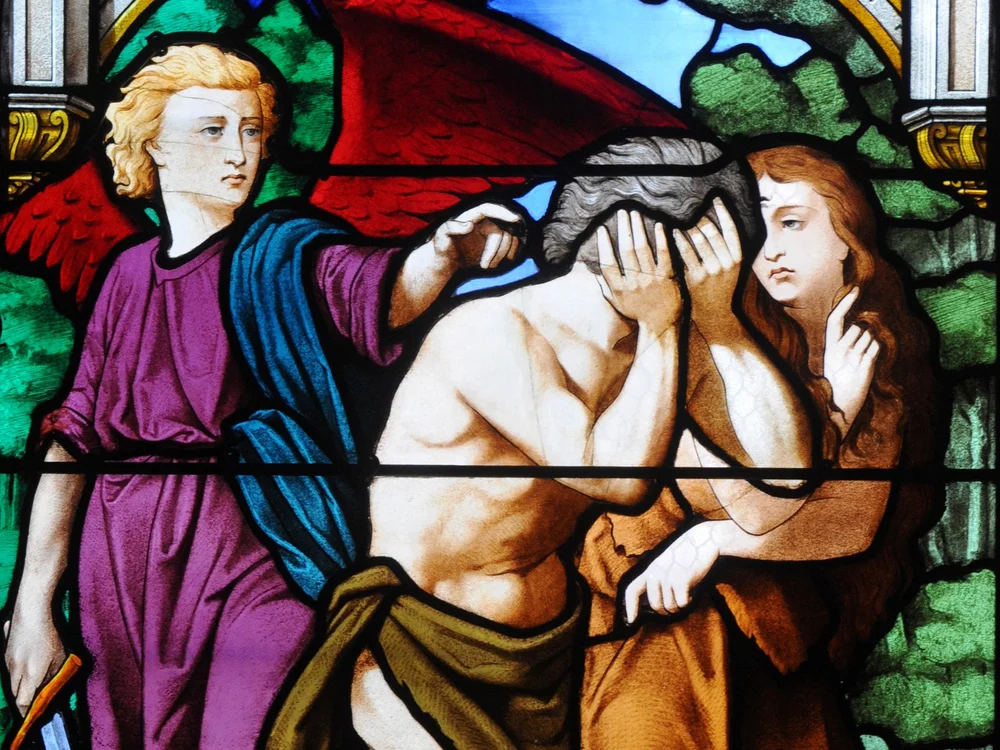
In Genesis 2:15-17 God warned Adam about the consequences that would come from eating from the tree of the knowledge of good and evil:
The Lord God took the man and put him in the garden of Eden to work it and keep it. And the Lord God commanded the man, saying, “You may surely eat of every tree of the garden, but of the tree of the knowledge of good and evil you shall not eat, for in the day that you eat of it you shall surely die.”
The relationship that existed between God and Adam had a condition placed upon it, which was Adam’s obedience. God’s command to Adam included both a reward for obedience (life) and a consequence for disobedience (death), and Adam represented all of humanity in this covenant. Adam failed to keep God’s command; instead, he and his wife ate the forbidden fruit, bringing death and condemnation upon themselves and all Adam’s posterity.
Why didn’t Adam and Eve die on the day they sinned in the garden of Eden as God said they would, and how is Eve’s name connected to Jesus?
The protoevangelium is the first announcement in the Bible of the gospel.
There is one key verse in the Old Testament that points us to the only way for people to be returned to a right relationship with God: In Genesis 3:15, a verse containing the protoevangelium (the first announcement in the Bible of the gospel), God pronounces his curse on the serpent, and with the curse is the great promise that summarizes the Bible:
Theologian Louis Berkhof points out that Genesis 3:15, while not specially naming Christ Jesus, points to him:
The prophecy of redemption is still impersonal in the protoevangel, but it is nevertheless a Messianic prophecy. In the last analysis the seed of the woman is Christ, who assumes human nature, and, being put to death on the cross, gains the decisive victory over Satan. — Louis Berkhof, Systematic Theology (1996 ed.), p. 294.
In his mercy God let Adam and Eve live so that the messiah would come from the seed of the woman.
God had a plan all along. Because God is all-knowing, he knew from eternity that Adam would disobey him and that Adam’s only hope—and that of his descendants—could only come from God himself. A second Adam must pass the test Adam failed to pass. Satan appeared to have the victory (“you shall bruise his heel”) when Jesus was crucified, but it was actually Jesus who triumphed over sin, death, and the devil (he shall bruise your head).
The second Adam, Christ Jesus—both fully God and fully man, would keep God’s law perfectly and bear the full punishment for sin as the perfect once-for-all sacrifice, so that his people would once again be in full communion with their Creator.
In naming his wife Eve, Adam showed his faith in God to keep his promise in Genesis 3:15.
Adam and Eve would not die right away because they must bring forth children from whom the Savior would come. Adam showed his faith in God’s promise to save him by naming his wife Eve, which means the mother of all living (Gen. 3:20). Indeed, the seed of the woman, Christ Jesus, would fulfill all his Father sent him to do so that all who believe in him would have life in the presence of God for all eternity.
Disclosure: This post may contain affiliate links, meaning Beautiful Christian Life LLC may get a commission if you decide to make a purchase through its links, at no cost to you.
There are holidays people observe that are based on events related to a nation’s history, such as the Fourth of July and Memorial Day. Other holidays, such as Christmas or Easter, are based on remembering religious historical events. But each of us has a peculiar holiday linked to our own person.
Birthdays are a personal “holiday,” so to speak. We feel that it is a special day, and even people who don’t know you very well will wish you a “Happy Birthday” and sometimes even go out of their way to do something nice for you.
Why are birthdays special? As we get older, we can sometimes feel birthdays aren’t as special or as important to celebrate. They just aren’t as exciting as when we were kids. While the Bible doesn’t command a celebration of birthdays, there are good reasons to continue to celebrate the birth of a person—and a birthday is a perfect time to do it.
It is good to affirm the value of a person.
In Genesis 1-3, God goes about creating a beautiful and good creation. His most celebrated creation is man. God forms humanity in a very personal way:
Then God said, “Let us make man in our image, after our likeness. And let them have dominion over the fish of the sea and over the birds of the heavens and over the livestock and over all the earth and over every creeping thing that creeps on the earth.”
So God created man in his own image,
in the image of God he created him;
male and female he created them. (Gen. 1:26-27)
Man is given a special status as God’s image bearers. What does that mean? God is king over his creation, is holy and good (moral attributes), and a creator. In a similar way, man was made a king over creation and was supposed to rule over creation well (Gen. 1:28), be holy and good, and follow God’s word (Gen. 2:17). God has created every human with intrinsic value because they are made in his image. Whether someone is an infant, a teenager, or an octogenarian, human life is special and precious in God’s sight.
The life of man was so precious that the unjust taking of that life carried a severe punishment (Gen. 9:6). The psalmist, when faced with the marvels of creation, is amazed that God has created man in such a special way, with an elevated status (Ps. 8:4-6). People hold a special place in this world.
People are blessings from God.
One of the first commands God gave Adam and Eve as part of their image-bearing was to “be fruitful and multiply” (Gen. 1:28). Children were an important part of man’s initial purpose, not an afterthought. God created life, and Adam and Eve were given the privilege of creating new life.
In Scripture we hear about the wonderful blessing that children are and how God cares for them while they are still in the womb:
Behold, children are a heritage from the LORD, the fruit of the womb a reward. (Ps. 127:3)
For you formed my inward parts; you knitted me together in my mother’s womb. I praise you, for I am fearfully and wonderfully made.Wonderful are your works; my soul knows it very well. (Ps. 139:13-14)
Grandchildren are the crown of the aged, and the glory of children is their fathers. (Prov. 17:6)
Human beings of all ages are wonders of God. Just as we are amazed by and recognize the glory and blessing of a stately mountain range or the awesomeness of a crashing ocean, we should join with the psalmist in praising God for human life. Birthdays are great opportunities to remind a person of the blessing he or she is and how they are a wonder of God.
Birthdays are a time for thankfulness.
Birthdays are a fantastic time to contemplate more positive things. There is so much complaining, strife, and conflict that swirls around us. It is easy to be pulled down into focusing on troubles and trials and take people and things for granted. Birthdays provide an opportunity to thank God for the life of a person who is made in the image of the God of the universe and is an amazing creation.
It is important to remember that God is the one who should be the focus of a birthday. When we celebrate someone’s birth, we can remember that our Creator’s image is stamped upon this unique person, and we can thank God for his gift of their life.
Disclosure: This post may contain affiliate links, meaning Beautiful Christian Life LLC may get a commission if you decide to make a purchase through its links, at no cost to you.
No one wants to have to live through a traumatic event, but they still happen anyway in our fallen world. After experiencing several such events, including the sudden death of my son over seventeen years ago, I have found the following things to be soothing to do during the healing process.
1. Listen to the Bible.
Sometimes when reading the Bible after a traumatic event, it’s not easy to concentrate. We can skim quickly through passages we have already read multiple times without really absorbing them. If you find yourself doing this, or you just feel too sad or angry to read your Bible, try listening to the Bible online. I use the ESV audio version at BibleGateway.com. I can rest and hear God’s word at the same time, and I have noticed important points by hearing Bible passages spoken that I have missed while reading them.
It is also interesting to note that the majority of people couldn’t read in the first century, and it was common practice for believers to learn from God’s word by hearing it read out loud to them.[1]
2. Always pray honestly, even when you feel like God has let you down.
We can be both honest with and respectful toward our heavenly Father in our prayers. Perhaps something has happened where you feel like God has singled you out in a punitive way, or someone you love dearly, in allowing a great tragedy to occur. You are angry and confused, and your whole world has been rocked so hard that you don’t know if you can survive. You can tell God that you feel angry. You can tell him that you don’t understand one bit why you have to go through this. He knows all things. He knows you are hurting. He knows you are confused. He knows you can’t see the whole picture like he does.
Be honest with your heavenly Father and cry out to him with a humble heart. Ask him to help you understand the “why’s” and “what now’s” of your circumstances as much as he is willing to do. God has his reasons for allowing suffering in the lives of his children, and we can trust that one day we will look back from the other side of the shore and also say, “He has done all things well” (Mark 7:37).
3. Reach out to someone you know for in-real-life help.
Maybe you need a hug right now. Maybe you need someone to come over and just sit next to you. Please don’t be shy. Don’t suffer all alone. Reach out to a person who would be willing to help. I remember a day when I was going through a particularly difficult time. My husband was traveling, and I didn’t feel up to leaving my home to get groceries (this was before today’s grocery delivery services were around!). I called my friend and told her that I was struggling and needed some food, and she jumped right into action. She brought over several meals and then just sat with me while I cried on her shoulder. I don’t remember saying much. I do remember what a great comfort it was to have my friend take care of me.
4. Step outside.
Maybe you don’t feel like leaving your home—ever again. I get it. Still, it’s good to take at least a moment and step outside, weather permitting. Take a few breaths, pause, and feel the air on your face. Perhaps the next time you might be open to taking a short walk. There are likely people in your life who would go on a walk with you and talk, or not talk, along the way. It’s good to move your body and get some exercise if you’re up to it.
5. Read helpful books by people who have also endured great suffering.
While it can feel like hardly anyone has had to suffer through what you are experiencing, and sometimes that is the case, for the most part many of life’s traumatic experiences have been endured by other people in some similar form. One of the books that was most helpful to me after the death of my son is Jerry Sittser’s A Grace Disguised: How the Soul Grows through Loss. Reading about how Sittser was able to survive the sudden deaths of his mother, wife, and young daughter from a car accident gave me hope that I could also survive my loss.
6. Go easy on yourself.
You don’t have to pursue activities and goals at your normal pace all the time. It’s not always a good thing to be busy. Sometimes we don’t have a choice in the matter: after a traumatic event, we have to return to work, take care of the kids or our parents, or fulfill some other pressing responsibilities. Still, if you can take some pressure off yourself, consider doing so.
After my son died, my pastor told me, “Your job right now is to live.” His words helped me a lot. I didn’t have to figure everything out in my mind. I didn’t have to perform in some way. I just had to keep living, and that was still a lot to do at the time. Let this be a time when you give yourself permission to remove those extra expectations of yourself, some of which you probably shouldn’t have anyway!
7. Reach out to qualified people for counseling.
Not everyone is equipped to provide helpful counseling, so it is critically important to exercise great caution in this area. And just because someone is a Christian counselor doesn’t mean the person has a sound theological foundation or the skills to apply solid biblical teaching to your particular circumstances and struggles.
Even if you ask people you respect for recommendations, it may take meeting with several counselors to find someone with whom you can have fruitful dialogue. It’s worth making the effort, though, as a qualified counselor can be extremely helpful as you process the traumatic event over time.
8. Don’t pressure yourself to fully process what has happened in a certain amount of time.
Traumatic events take lots of time to process; some can even take an entire lifetime. Don’t allow people to put you on a schedule of when you should “get over” your pain and suffering and “move on.” Hold on to the sure truth that God has a reason for all he allows in our lives and this world isn’t the end of the story.
God is bigger than any situation in which you find yourself right now. He can redeem anything that has happened to you or will happen to you. God can—and does—make the most beautiful things out of the biggest tragedies of life. If you don’t believe this, remember the cross of Jesus Christ. Cling to your Savior, take a day at a time as he has told us to do, and rest in God’s sovereignty in your life, for you are precious in his sight.
This article was originally published on August 19, 2019.
[1] Everett Ferguson, Backgrounds of Early Christianity (Grand Rapids: William B. Eerdmans Publishing Company, 2003), 132; Brian J. Wright, Communal Reading in the Time of Jesus: A Window into Early Christian Reading Practices (Minneapolis: Fortress Press, 2017), 156.
from Blog - Beautiful Christian Life https://ift.tt/EVISc2t
via IFTTT